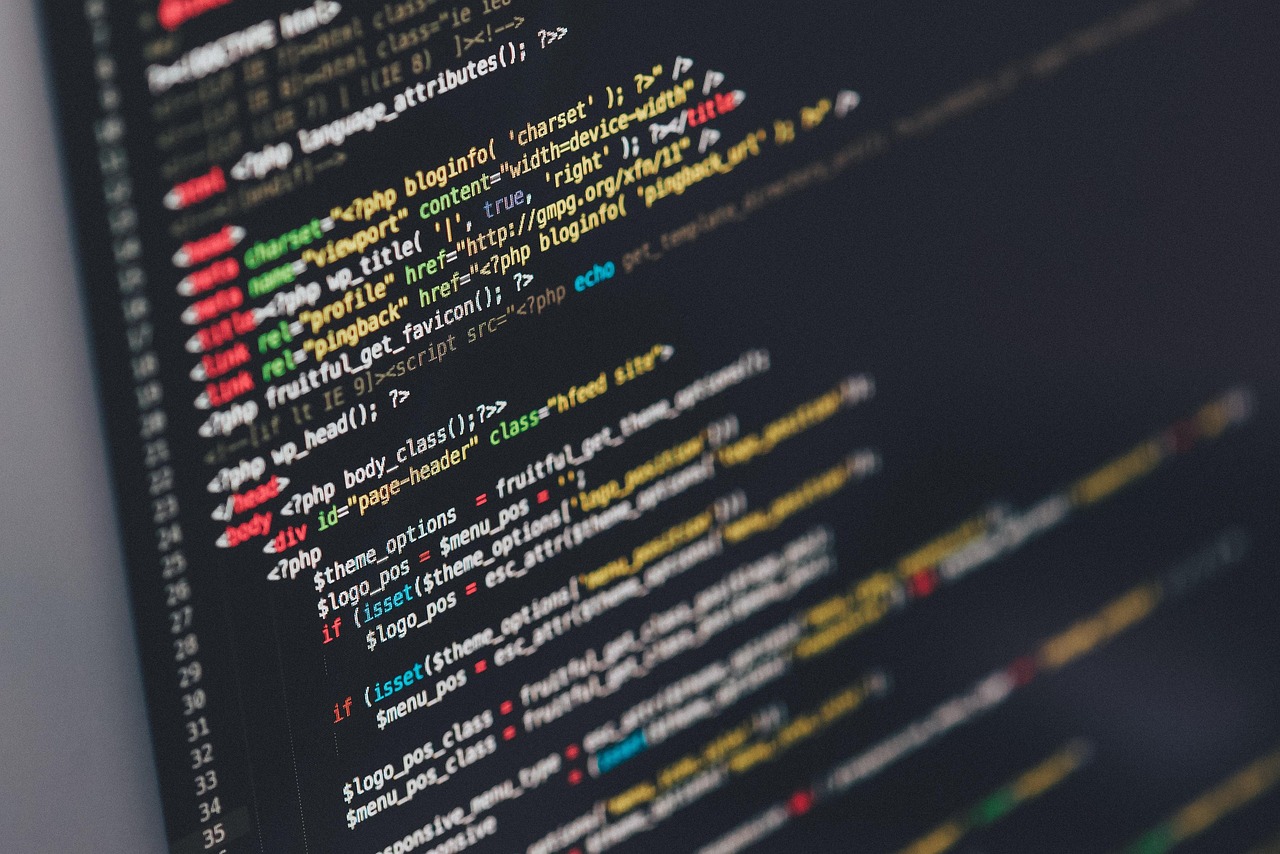
The Stack We Inherited Was Never Really Built for Us. There is a particular kind of technical debt that nobody talks about honestly — the kind that was never really *your* decision in the first place. For the better part of two decades, if you wanted a website that a non-developer could update, you needed a database, a server-side language, and a content management system sitting on top of both. PHP became the default answer. Not because it was always the best answer, but because it was the *available* answer at the time. That time is over. In 2026, the original justification for running a dynamic backend behind a marketing site, a portfolio, a product landing page, or even a mid-sized content publication has quietly collapsed. The security vulnerabilities are more dangerous than ever. The hosting costs are increasingly hard to justify. The performance gap between dynamic and static has widened into a chasm. And the one argument that kept PHP-powered CMS platforms alive in most non-enterprise conversations — that they were simply *easier* for non-technical stakeholders to use — has been decisively answered by AI tooling. This is the story of why, as a product owner, I stopped recommending dynamic backends for the majority of web projects, and why you probably should too. ---
First, Let's Be Honest About What Most Websites Actually Do. Before we talk about solutions, we need to talk about the problem with how we frame the question. When someone says they "need" a dynamic backend, what they usually mean is one of three things: 1. They want to be able to update content without touching code 2. They want forms, contact submissions, or light user interactions 3. They were told by someone that dynamic sites are "more powerful" Point three is a marketing artifact masquerading as a technical requirement. Points one and two are legitimate needs — but they do not, in 2026, require a PHP runtime executing on a server every time someone loads a page. The conflation of *content management needs* with *dynamic server architecture* is the original sin of how we sold the web to non-technical buyers. It made sense in 2008. It is a liability in 2026. ---
The Security Reality Nobody Wants to Price In. Let me be direct about something that often gets softened in polite product conversations:
Running a PHP-based CMS is an ongoing, active security obligation, not a one-time setup decision. Every plugin, every theme, every dependency represents an attack surface. Every month that passes without updates is a month of accumulated exposure. Every database connection is a potential vector. The threat landscape has not gotten kinder — it has gotten dramatically more sophisticated, with automated scanning tools probing millions of URLs daily looking for unpatched vulnerabilities, exposed configuration files, and exploitable admin panels. The security model of a dynamic CMS is fundamentally reactive. You update when vulnerabilities are disclosed. You patch when exploits are released. You scramble when your database gets exfiltrated or your server becomes part of a botnet. The entire posture is defensive, and it requires consistent, competent attention to maintain even baseline safety. Static sites operate on an entirely different security model — one that is Architecturally superior, not just incrementally better. When your website is a collection of pre-built HTML, CSS, and JavaScript files served from a CDN edge node, there is no database to inject into. There is no admin panel to brute-force. There is no PHP runtime to exploit through a vulnerable file upload handler. There is no server executing code on request at all. The attack surface collapses to almost nothing because there is almost nothing there to attack. This is not a theoretical benefit. For a product owner, it translates to concrete outcomes: fewer incident response situations, lower security monitoring costs, no emergency overnight patching, and dramatically reduced exposure to the reputational damage that comes from a compromised website. The total cost of security for a well-structured static site is a fraction of what responsible dynamic site ownership requires. When you account honestly for security tooling, monitoring, regular audit time, and the expected cost of eventual incidents, the gap is stark. ---
The Performance Conversation Has Been Settled. Speed is not just a user experience metric anymore. It is a revenue metric, a conversion metric, a search ranking metric, and a brand perception metric. Years of industry data have made the relationship between page load time and business outcomes extremely clear. A dynamic PHP site, even well-optimized and sitting behind caching layers, is working against physics. When a user requests a page, the server receives that request, PHP executes, a database query runs, the result is processed, HTML is assembled, and then — finally — a response begins traveling toward the user. Every one of those steps adds latency. Caching reduces it, but caching also introduces its own complexity, invalidation problems, and failure modes. A static site served from a global CDN operates on an entirely different model. The HTML already exists. It is already sitting on an edge node that is geographically close to the user. The server receives a request and responds with a file. That is the entire chain. There is no execution, no database, no assembly. The performance gap between these models is not marginal. We are talking about time-to-first-byte measurements that differ by hundreds of milliseconds under normal conditions and by seconds under load. For a product owner translating this into business impact: that is the difference between a user who bounces and a user who converts. It is the difference between a page that ranks and a page that sits on page three. By 2026, global CDN infrastructure has matured to a point where a static site can deliver consistent sub-100-millisecond response times to users on multiple continents without a dedicated operations team managing it. Achieving equivalent performance with a dynamic backend requires significant engineering investment in caching strategy, database optimization, server configuration, and ongoing tuning. Most organizations do not make that investment adequately, which means most dynamic sites are slower than they should be and slower than their static equivalents would be. ---
The Last Argument for PHP Was Always "Ease of Use" — And AI Just Answered It. Here is where I want to be careful, because this argument deserves real respect before it gets dismantled. The genuine reason PHP-powered CMS platforms spread as widely as they did was not security, was not performance, and was not cost. It was the simple, legitimate need for non-technical people to manage content without involving developers for every change. The visual editor, the page builder, the "just click and type" content management experience — these were real products solving a real problem, and they solved it well enough that entire ecosystems grew around them. That argument has now been answered at its root. AI-assisted content workflows in 2026 have made the gap between static site content management and dynamic CMS usability essentially irrelevant for the vast majority of use cases.
Consider what is now achievable:
Content creation and editing can happen in plain text, markdown, or structured formats that are immediately comprehensible to non-technical users, with AI tooling handling formatting, structure, and optimization suggestions inline.
Publishing workflows built around Git-based content pipelines — where content editors commit changes, trigger builds, and see previews — have been abstracted by tooling to the point where the underlying technical reality is entirely invisible to the person writing content. The editor sees an interface. They make changes. The site updates. They never know or care that there is a static site generator running underneath.
New page and section creation, historically the place where static sites stumbled because it required understanding file structure or templates, is now handled conversationally through AI interfaces that can generate properly structured content files, update navigation, and trigger deployments in response to natural language requests.
Image optimization, SEO metadata, structured content markup — all the tedious work that used to justify having a CMS do it dynamically — can be handled at build time, with AI assistance, faster and more consistently than a dynamic system that applies it on each request. The "ease of use" gap was always partly real and partly manufactured. The manufactured part was the assumption that the only way to give non-technical users control over a website was to give a server-side language control over page assembly. That was a constraint of the tools available at the time, not a fundamental truth about content management. AI has collapsed that constraint. The legitimate part — that real humans need to update real content without developer involvement — is now fully addressable without a PHP runtime anywhere in the picture. ---
What This Actually Looks Like in Practice. For a product owner considering a new web project in 2026, the decision framework looks like this:
Does your site need user-specific dynamic content at runtime? That means content that differs based on who is logged in, what they have purchased, what their preferences are — content that cannot be pre-built because it does not exist until the user exists. If yes, you may have specific components that require dynamic execution. But even then, the answer is targeted API calls to purpose-built services, not a PHP monolith rendering every page.
Does your site need a database? Almost certainly not for a marketing site, a product landing page, a documentation hub, a blog, or a portfolio. Forms submit to third-party services or serverless functions. Search is handled by indexed static content or an external search service. Comments, if needed at all, are served by embedded services. The database requirement evaporates when you examine it component by component.
Does your team need to update content frequently? Yes, and that is exactly what modern static site tooling with AI-assisted workflows is built for. The answer is a better content workflow, not a heavier technical stack.
Are you responsible for this site's security? If yes, then every day it runs on a dynamic backend with database connectivity and a plugin ecosystem is a day you are carrying risk that you do not need to carry. ---
The Professional Obligation I want to end with something that I think product owners do not say enough, because it feels presumptuous or technical-adjacent:
Recommending the right architecture is part of the job. When a stakeholder asks for a website, they are not asking for PHP. They are not asking for a CMS. They are asking for an outcome — a presence, a channel, a tool for their audience. The architecture that delivers that outcome is our responsibility to specify correctly, and "we have always done it this way" is not a technical specification. In 2026, the default recommendation for most web projects should be static generation with CDN delivery and AI-augmented content workflows. Not because it is trendy, but because it is objectively more secure, faster, cheaper to run, and — with current tooling — no harder for non-technical stakeholders to use. PHP served us well in the era it was designed for. That era is not 2026. The obligation now is to build web products that are not carrying unnecessary complexity, unnecessary cost, and unnecessary risk in service of a problem that has already been solved better. The websites that do not need PHP in 2026 include, with very few exceptions, the website you are probably thinking about right now. Build accordingly.